
Software culture is visible when a deadline slips, a junior engineer asks a question, or a production issue interrupts the day. For teams in Pakistan working across client time zones, the most useful cultural improvements are often simple: clear decisions, respectful feedback, and realistic availability.
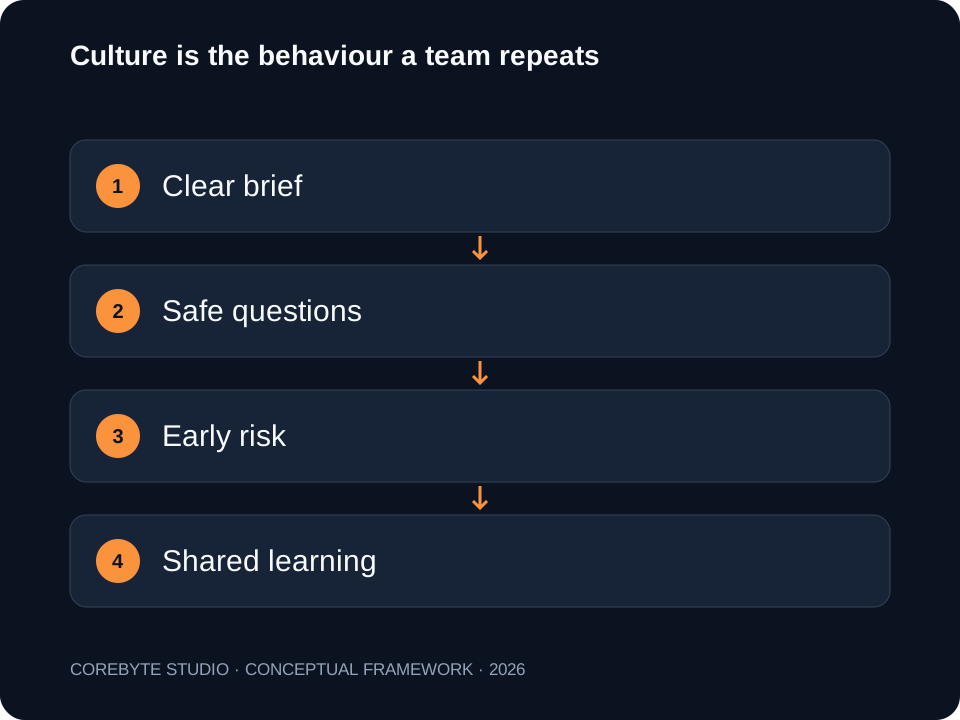
Replace vague urgency with a clear work agreement
A message marked urgent does not explain the consequence or the deadline. State what is blocked, when the decision is needed, and who can resolve it. A client waiting on an invoice export has a different problem from a production checkout failure. Treating both as emergencies weakens the team’s response to either.
At the start of a project, document normal working hours, expected response windows, release responsibilities, and the escalation channel. This is especially useful when a Pakistani team serves clients elsewhere. An agreed overlap period should not silently become an obligation to stay online every evening.
Make questions inexpensive to ask
A junior who cannot explain a requirement needs context, not public embarrassment. Ask what they understand, identify the uncertain part, and clarify the next step. Seniors should model the same behaviour when they encounter an unfamiliar domain. Confidence and knowledge are not the same thing.
Use short written briefs with examples and acceptance criteria. If multiple engineers misread the same requirement, inspect the brief before judging the individuals. A team improves faster when recurring confusion becomes a documentation problem to fix rather than a personality flaw to criticise.
Review decisions rather than status performance
DORA’s delivery metrics give teams a reference for examining software delivery performance. Our management recommendation is to pair delivery observations with conversations about obstacles, rather than ranking individuals by commits or lines of code. An engineer preventing a dangerous release may produce less visible output and more value.
In a weekly review, ask what reached users, what remains uncertain, and which decision needs help. Avoid forcing every contributor to present a polished narrative. A small truthful update gives management more useful information than a confident percentage that cannot be verified.
Respond to incidents with accountability and learning
An incident review should establish what happened, how it was detected, what increased the impact, and which improvement has an owner. Removing blame does not remove responsibility. A missed control still needs correction; the question is whether the system will catch the next similar error.
For example, if an expired credential breaks an integration, renewing it restores service. Recording ownership and adding an expiry alert reduces recurrence. Tell the client what changed and what remains at risk. Silence after recovery leaves both trust and operational knowledge incomplete.
Make growth part of paid work
Reserve a modest amount of working time for reviews, mentoring, and documentation. If learning is expected only after hours, people with caring responsibilities or demanding commutes have less access to progression. This can narrow the team’s talent pipeline without anyone explicitly intending it.
Review culture using concrete questions: can a person disagree with a technical choice, ask for help early, and take leave without the system failing? A positive answer should be supported by ordinary operating habits. Team outings can be enjoyable, but they cannot repair unclear ownership or permanent overload.
Put this into practice
- Agree on overlap hours and emergency escalation.
- Write examples into requirements.
- Review delivery at team level rather than counting commits.
- Assign owners to incident follow-up actions.
- Put mentoring and documentation into the work schedule.
Frequently asked questions
Can a small software house afford formal culture practices?
Yes. A one-page working agreement, short decision log, and respectful reviews require little overhead and reduce recurring confusion.
Does a blame-free incident review mean no accountability?
No. It means examining causes without humiliation while still assigning owners, deadlines, and evidence for corrective actions.